

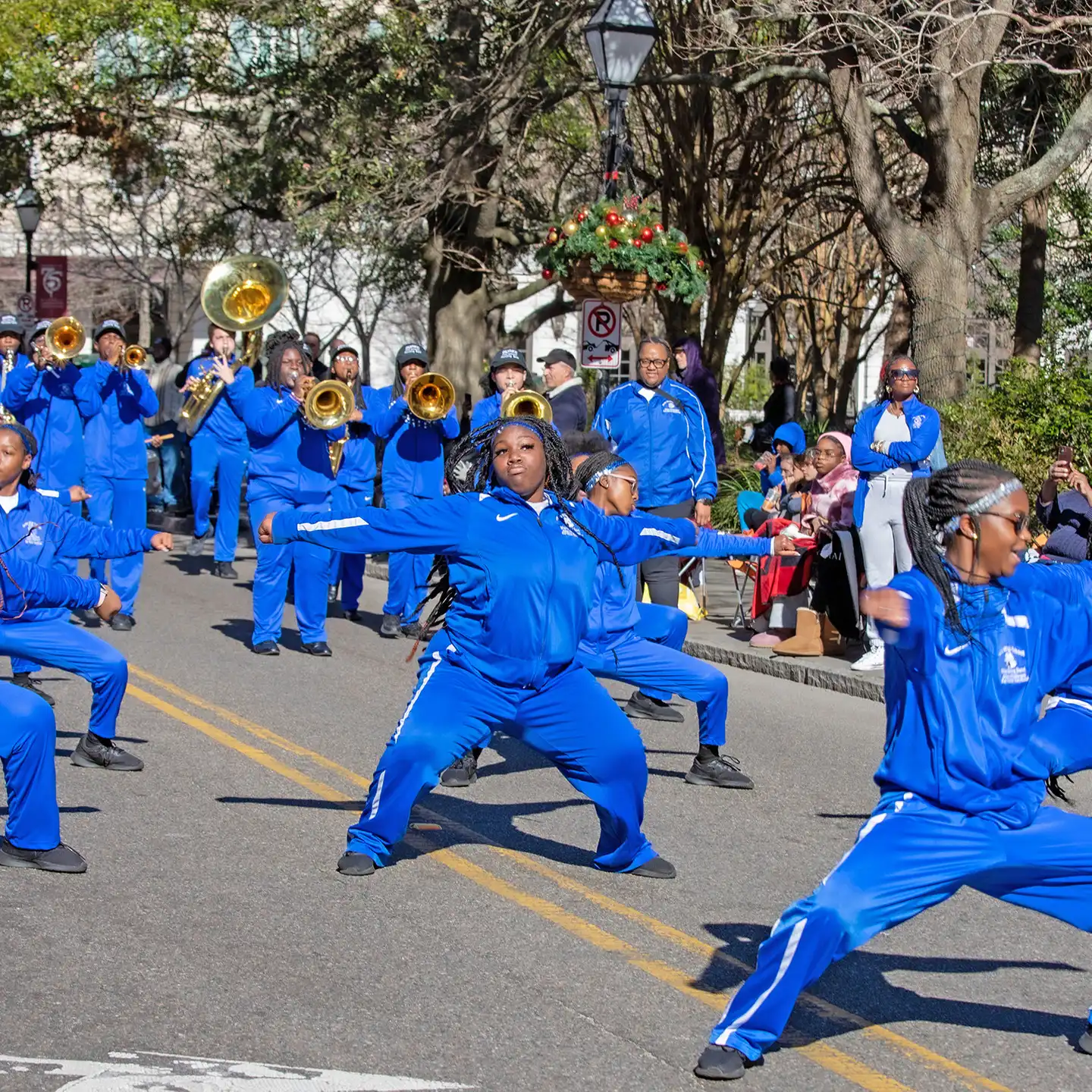
When people think about the Civil Rights Movement, they often picture the most widely known places—Washington, D.C., Birmingham, Selma, Atlanta. But Charleston holds an important place in this story, too. Dr. Martin Luther King Jr. didn’t just impact the Lowcountry from afar through speeches and headlines—he visited Charleston, and his message reached our community directly.
Charleston is known for its beauty and history, but that history runs deeper than what you see on a postcard. It’s layered, complex, and still unfolding. Charleston’s Black history is not a footnote—it is foundational. And understanding that context is part of why Dr. King’s presence here matters.
Dr. King’s Visits to Charleston
Dr. Martin Luther King Jr. visited Charleston more than once, including speaking at Mother Emanuel AME Church in the early 1960s. Mother Emanuel is one of Charleston’s most historic churches and has long been a symbol of strength, leadership, and the role faith communities have played in the fight for justice. During that time, Dr. King encouraged voter registration and community action—reminding people that progress doesn’t happen by waiting. It happens when individuals decide to show up, speak up, and keep moving forward.
He later returned in 1967, delivering powerful remarks at Charleston County Hall, where he spoke openly about injustice, inequality, and the urgent need for progress—messages that still feel just as relevant today. His words weren’t just meant to be remembered; they were meant to move people toward real change.
Why It Still Matters Today
Charleston continues to grow and evolve, and with that growth comes responsibility. The conversations Dr. King helped ignite—about fairness, opportunity, and belonging—are still deeply relevant in our city. MLK Day reminds us that we don’t just honor the dream—we carry it forward through the way we live, lead, and serve our community.
For many, MLK Day is a long weekend. For others, it’s a time of reflection and remembrance. But at its core, it’s an invitation: to learn more than what we were taught in school, to reflect honestly, and to show up in meaningful ways—through service, community involvement, and everyday actions that help build a stronger Charleston for everyone.
Dr. King’s visits to Charleston remind us of something important: Charleston isn’t just a backdrop in history—it’s part of the story. And we all have a role in what comes next.
Social Cookies
Social Cookies are used to enable you to share pages and content you find interesting throughout the website through third-party social networking or other websites (including, potentially for advertising purposes related to social networking).