

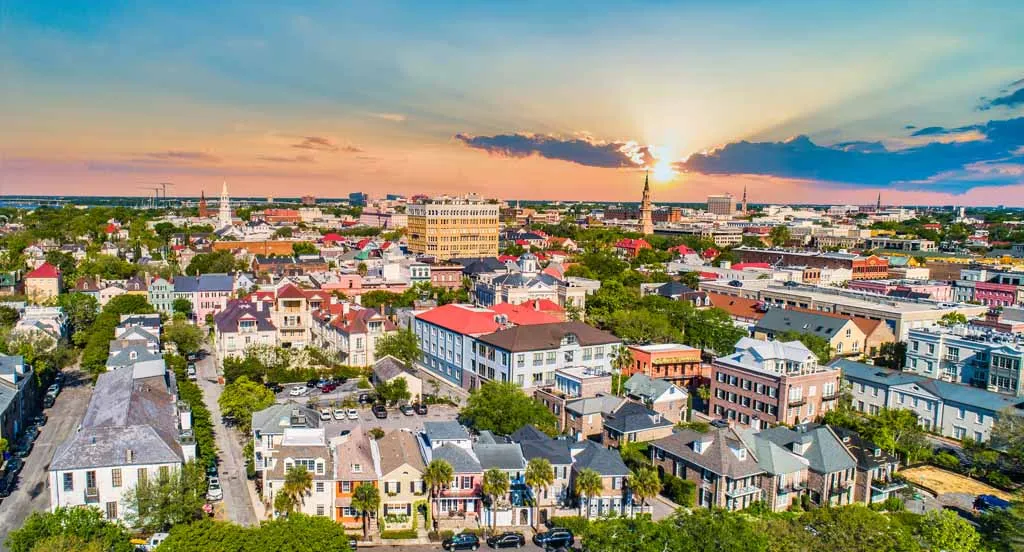
If you’re thinking about moving to the Lowcountry, “What’s the cost of living in Charleston?” is probably one of the first things you typed into Google. You’re not alone. It’s one of the most-searched questions about relocating here.
The honest answer: Charleston costs more than the national average, but not in the ways most people expect. Housing is the big line item. Taxes are a pleasant surprise. And insurance is the cost newcomers most often underestimate.
The Short Answer
Most local estimates put Charleston’s cost of living roughly 8–20% above the national average, and housing drives nearly all of that gap. Here’s a quick snapshot:
- Median sold home price, Charleston County (Sept 2026): $610,000
- Average rent, 1-bedroom: about $1,950–$2,000/month
- Average rent, 2-bedroom: about $2,200–$2,500/month
- Homeowners insurance ($300K dwelling, 2025 data): about $5,300–$5,400/year, vs. $2,584 nationally
- Electric bill: about $150–$350/month, highest in summer
- State income tax: top rate of 5.21%, and Social Security isn’t taxed
Breaking Down the Big Costs
Housing: The Biggest Piece of the Puzzle
Over the past 12 months, the median sold price for a home in Charleston County has ranged from $605,000 to $685,000, according to CTAR MLS data. The average sold price runs much higher, close to $1 million, because waterfront and island properties pull it up.
That’s the key thing to know: “Charleston” isn’t one price point. Downtown condos, a starter home in West Ashley or North Charleston, a family home on James Island and a beach house on Sullivan’s Island live in completely different worlds. Homes are also taking longer to sell than during the pandemic rush: about 51 days on market in September 2026, versus about 21 days in September 2021. That gives buyers more room to negotiate.
Property Taxes: The Pleasant Surprise
South Carolina rewards people who live in the home they own. A primary residence is assessed at 4% of its value, while second homes and rentals are assessed at 6%. Primary residences are also exempt from school operating taxes.
The catch: the 4% rate is not automatic. You have to apply for the legal residence (4%) special assessment with the Charleston County Assessor after you close. Miss it, and you could pay the higher 6% rate.
Insurance: The Cost Newcomers Underestimate
Coastal living comes with coastal premiums. Charleston homeowners pay roughly double the national average for homeowners insurance, and many properties also need separate flood insurance depending on their FEMA flood zone. Get insurance quotes during your inspection period, not after closing.
Income Taxes and Everyday Costs
South Carolina’s income tax tops out at 5.21%, and Social Security benefits are fully exempt. Residents 65 and older can also shelter up to $15,000 of income per person through state deductions, which is a big reason so many retirees choose the Lowcountry.
Everyday costs like groceries run slightly above the national average, and South Carolina gas prices are consistently among the lowest in the country. Plan for higher electric bills from June through September. Air conditioning isn’t optional here.
A Local’s Take: Where Your Money Goes Further
I was born and raised on James Island, and I’ve been helping people buy and sell here since 2018. Here’s what I tell every client relocating to Charleston:
- Pick your area before your budget. A 20-minute drive can change your price by hundreds of thousands of dollars. West Ashley, Summerville, North Charleston, and surrounding areas often offer more home for the money than the peninsula or the beaches.
- Budget for the full monthly payment, not just the price. Insurance, flood coverage and HOA fees can add hundreds a month. Two homes at the same price can carry very different monthly costs.
- File for your 4% assessment right away. It’s one of the easiest ways to save money as a new South Carolina homeowner.
- Visit in August. If you can handle a Lowcountry summer (and the power bill that comes with it), you’ll love it here year-round.
So, Is Charleston Worth the Cost?
For most people who move here, yes. You’re paying for the marshes, the beaches, the food, the history and a community that still feels like home. The key is knowing which costs to plan for before you fall in love with a house.
Thinking about moving to Charleston? Reach out and we’ll help you find the neighborhood that fits your life and your budget.
Sources: CTAR MLS market statistics (Charleston County, Oct 2025–Sept 2026); RentCafe; Zumper; Insurify; EY Tax News; Lincoln Institute; RCS Financial Planning.
Social Cookies
Social Cookies are used to enable you to share pages and content you find interesting throughout the website through third-party social networking or other websites (including, potentially for advertising purposes related to social networking).